SCROLL DOWN
The Symposium

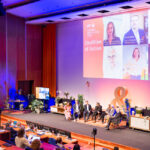
The Sustainable Wheat Initiative Europe symposium was organized to create an opportunity to build the required long-term alliances in our bakery ecosystem and to publicly launch the Manifesto as a ‘coalition of action’ with our value chain partners, while inspiring our wider ecosystem to endorse or actively participate.

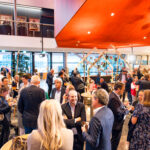
Over 200 people from the bakery value chain ( Bakery companies, Artisan bakers, National bakery federations, Miller federation(s) and Millers, Farming federations, Agricultural cooperatives, suppliers, Financial institutions, Universities, EU policy makers, NGO’s, press…) were present on June 4-5 2025 at the symposium in Utrecht.

The Symposium

The Sustainable Wheat Initiative Europe symposium was organized to create an opportunity to build the required long-term alliances in our bakery ecosystem and to publicly launch the Manifesto as a ‘coalition of action’ with our value chain partners, while inspiring our wider ecosystem to endorse or actively participate.

Over 200 people from the bakery value chain ( Bakery companies, Artisan bakers, National bakery federations, Miller federation(s) and Millers, Farming federations, Agricultural cooperatives, suppliers,  Financial institutions, Universities, EU policy makers, NGO’s, press…) were present on June 4-5 2025 at the symposium in Utrecht.

Revisit the program

Bread has been at the heart of humanity since its origins. Today, like any other responsible food sector, it is looking to the future, both in terms of climate change and the move towards a more plant-based diet. Sector leaders took this very seriously when they opened the way for a common strategy for our sector, the Sustainable Wheat Initiative Europe, with the aim of moving from scattered efforts to one at scale across the value chain, in good intelligence and coordination with upstream and downstream partners. This session will take you back to the background of the initiative and the fundamentals of the ongoing sustainability transition.
The noise around the sustainability transition is deafening—from the rollback of climate goals and EU reporting laws to the political backlash against DEI in the US Meanwhile, the real signals from climate, nature, and consumers are only getting stronger. In this keynote, strategist Wim Vermeulen presents a clear framework grounded in data and behavioral science. Through three core truths and three operating principles, he reveals how businesses can better define, communicate, and sell sustainable products in an increasingly skeptical market. A sharp, timely session for anyone asking the tough question: why isn’t sustainability selling?

Download the presentation

Optional & parallel sessions, no registration. Rooms will be announced on digital screens.

  • Lantmännen Unibake - Sharing 10 years of experience from our Sustainable wheat program; history, current status and call for actions
  • Mademoiselle Desserts - Because the result is as important as the way to deliver it
  • La Lorraine Bakery Group - Cultivating change: how La Lorraine Bakery Group tackles Scope 3 emissions through sustainable agriculture – from farm to bread

Opening with a short recap of day 1 highlights and introduction to day 2.

Rabobank Research will present its views on the European grain markets: from status quo and demand and supply drivers, to an outlook into the future including the importance of a focus on sustainability and resilience. The Food System Transition team will explain how Rabobank approaches this transition towards more sustainable and resilient agriculture (a.o. regenerative agriculture). Especially zooming in on the importance of finance and supply chain collaborations to enable this transition.

What is regenerative agriculture? What impact can we expect? Where are we today, what can we expect from technology?

Download the presentation

We know what to do, we are doing it yet not big enough and not fast enough? The voice of the farmer – what is needed to accelerate the transition? Testimonial from farmers across Europe.

While the European bakery industry has one of the lowest carbon footprints among food processors, it is responsible for more than 10 million tons of greenhouse gas emissions related to wheat and wheat flour. As a European sector, we express our ambition to reduce our wheat flour emissions by 30% by 2030 through a gradual shift in our supply. We want to make this transition in a trustworthy, pre-competitive, efficient and coordinated way, so that farmers and other value chain actors can plan accordingly. We want to support European wheat farmers and millers to make this transition in a way that is fair to the entire value chain, and that allows the bakery sector to purchase sufficient quantities and the right quality of sustainable wheat flour in a predictable and cost-effective way.

Download the presentation

Visits of the exposition area. Companies can sign the Manifesto.

The fundamental purpose of our sector is to put bread on the table of nearly 750 million EU citizens through our various distribution channels. Obviously, changing our production practices and final products cannot be done in abstraction from consumers’ feelings, expectations and buying behavior. This session will attempt to bring consumer science and distribution strategy face to face with our transformation goals.

Download the presentation

What does sustainability really mean to consumers? How do they respond to sustainability claims? Are they willing to pay a premium price? And most importantly: how can you change their behaviour. Prof. Gino Van Ossel will show how one size doesn’t fit all.

Download the presentation

Visits of the exposition area. Companies can sign the Manifesto.

Optional & parallel sessions, no registration. Rooms will be announced on digital screens.

  • Vandemoortele - Shaping a tasty future sustainably at Vandemoortele
  • Puratos - From Soil to Shelf: A New Era in Sustainable Baking
  • Soil Capital - The business case for regenerative agriculture in the baking sector

The European Union's Vision for the future of agriculture and food focuses on creating an attractive, competitive and resilient agri-food sector while ensuring fairness and improving living conditions in rural areas. It promotes cooperation and dialogue, engaging with all stakeholders, farmers, food chain operators and civil society. The presentation will highlight how this roadmap can accompany the Sustainable Wheat Initiative.

Thriving: Harnessing Business Innovation to Regenerate Nature, Society and the Economy. In this talk, Prof. Visser will show how innovation can move us from breakdown to breakthrough across six great transitions in nature, society and the economy, drawing on the underlying scientific principles of thriving.

Main sponsors

Supporters